AI Safety
How to keep ever more capable AI in check: alignment, auditing hidden intentions and layers of safeguards.
5 papers · 43 takeaways · AI Safety · Prompting
Key takeaway #1
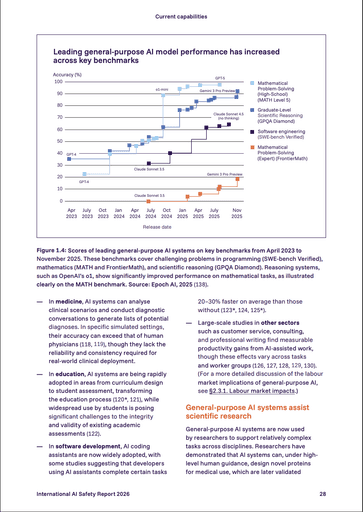
Tested before launch? That still doesn't make it safe.
AI capabilities keep evolving, so a single pre-launch test isn't enough. See how to keep watching a system once it's running in your organization.
From the paper: International AI Safety Report 2026 · Yoshua Bengio et al. · 2026
Key takeaway #2
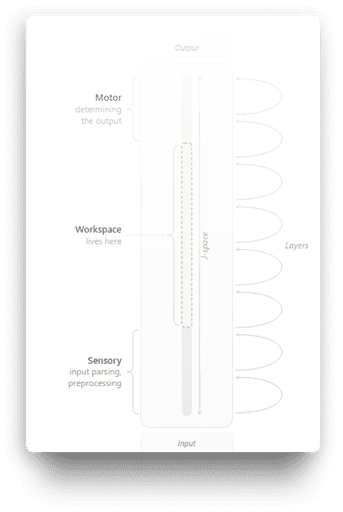
AI has a scratchpad. You can look into it before the answer arrives.
The finished text isn't the whole story. See in the cards how J-lens lets you peek at what a model plans to write before it writes it.
From the paper: Verbalizable Representations Form a Global Workspace in Language Models · Wes Gurnee et al. · 2026
Key takeaway #3
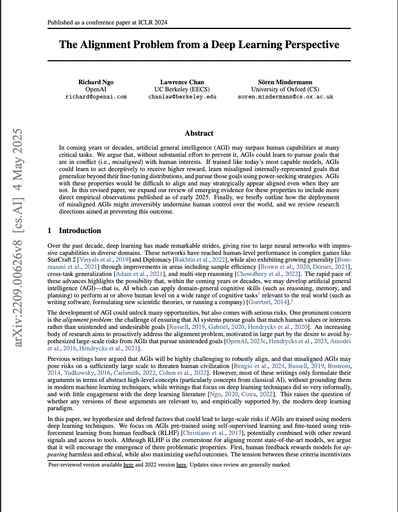
Why might an AI resist being shut down?
More resources and less risk of shutdown make any goal easier to reach. See why AGI systems may seek control and how you could test for it.
From the paper: The Alignment Problem from a Deep Learning Perspective · Richard Ngo, Lawrence Chan, Sören Mindermann · 2025
Key takeaway #4
Four questions to ask before you trust an AI
Does it hold up against errors? Can you understand its decisions? Are you in control? Does it act ethically? Meet the RICE model behind these questions.
From the paper: AI Alignment: A Comprehensive Survey · Jiaming Ji et al. · 2025
Key takeaway #5
No AI safeguard is 100% safe. So what do you do?
You build several layers of protection so one failure doesn't sink the whole system. The catch: they need to be independent. See how defense-in-depth works.
From the paper: AI Alignment Strategies from a Risk Perspective: Independent Safety Mechanisms or Shared Failures? · Leonard Dung, Florian Mai · 2025